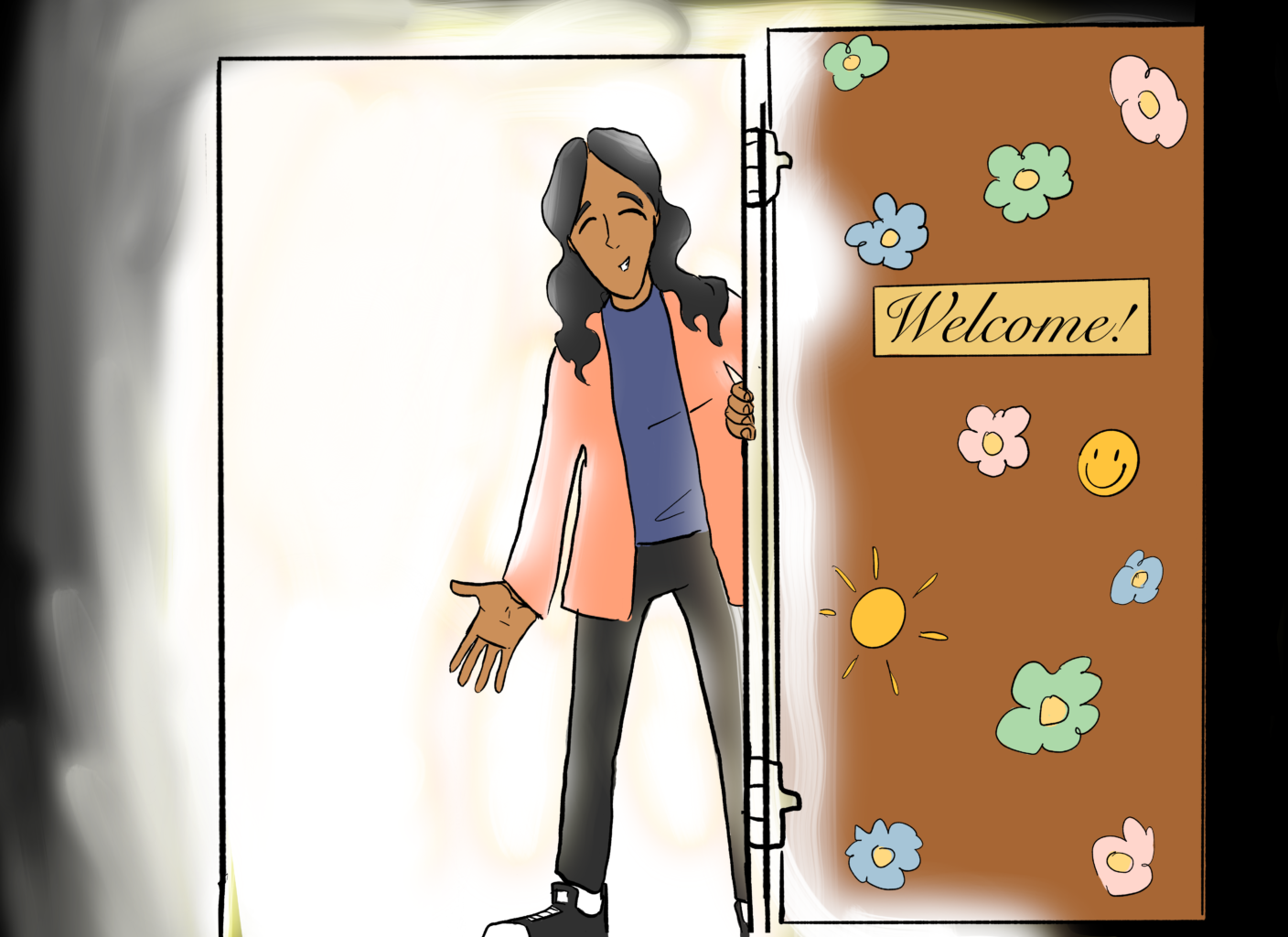
An illustration depicts a teacher opening her door for students to come through. Viewpoints Editor Isabella Gresham stressed the importance of creating open classroom environments. “Students know that teachers care and that they have different ways of showing it. However, it’s important that all teachers think actively about students’ sense of belonging in their environment,” Gresham wrote. Illustration by Sam Harwell
CCHS teachers must be proactive leaders and create safe environments to allow students to thrive.
Every day, students are left feeling like they are drowning.
With the seemingly never-ending sea of schoolwork, extracurriculars and activities, students are left swimming in open water trying to reach the sand. However, if teachers work proactively with students, it becomes less challenging for students to keep their heads afloat.
While some Clarke Central High School teachers already exemplify this ideal, all CCHS teachers should make proactivity a priority.
Proactive leadership in the classroom doesn’t mean waiting until a student is drowning to help them — it means having check-ins, fostering safe environments and motivating students.
According to an Education Resources Information Center article published in 2014, “Multiple studies have demonstrated when students were more engaged, aware, and comfortable with their environments they would become more active in their learning.”
Helping students begins with being there for them when they feel like a fish out of water. Whether that means literally having an open door or initiating check-ins with students, any action step can begin to create a safe learning environment – something CCHS Assistant Principal Terry Liggin excels at.
“If there’s something going on in your life and you want to talk, my door is open. You can come by,” Liggin said. “I’ve asked teachers to periodically give me kids that are really doing their job, and I’m going to make sure I do my best to (tell them) that I appreciate them doing a good job.”
In the hallways, Liggin will conduct meetings with students he needs to speak to about grades or behavior, speaking candidly but kindly. Initiating these conversations helps students feel safe enough to share.
Proactive leadership in the classroom doesn’t mean waiting until a student is drowning to help them — it means having check-ins, fostering safe environments and motivating students.
CCHS senior Kimwell Jones, who takes English department teacher Grace Crumpton’s poetry class, has seen Crumpton create a nurturing classroom environment.
“Ms. Crumpton is very open to everything. If anything is going on, she’s gonna let you know. That itself inspires everybody else to speak,” Jones said. “Ms. Crumpton’s environment is pretty special. I feel like all teachers should work to be more like Ms. Crumpton. She’s just a one-of-a-kind type of teacher.”
Students know that teachers care and that they have different ways of showing it. However, it’s important that all teachers think actively about students’ sense of belonging in their environment — sometimes, a timely intervention can make all the difference for a student in need.
Student safety starts with CCHS faculty working to be proactive leaders and reaching out to create welcoming environments. No student should be left feeling as though they are drowning without any help.