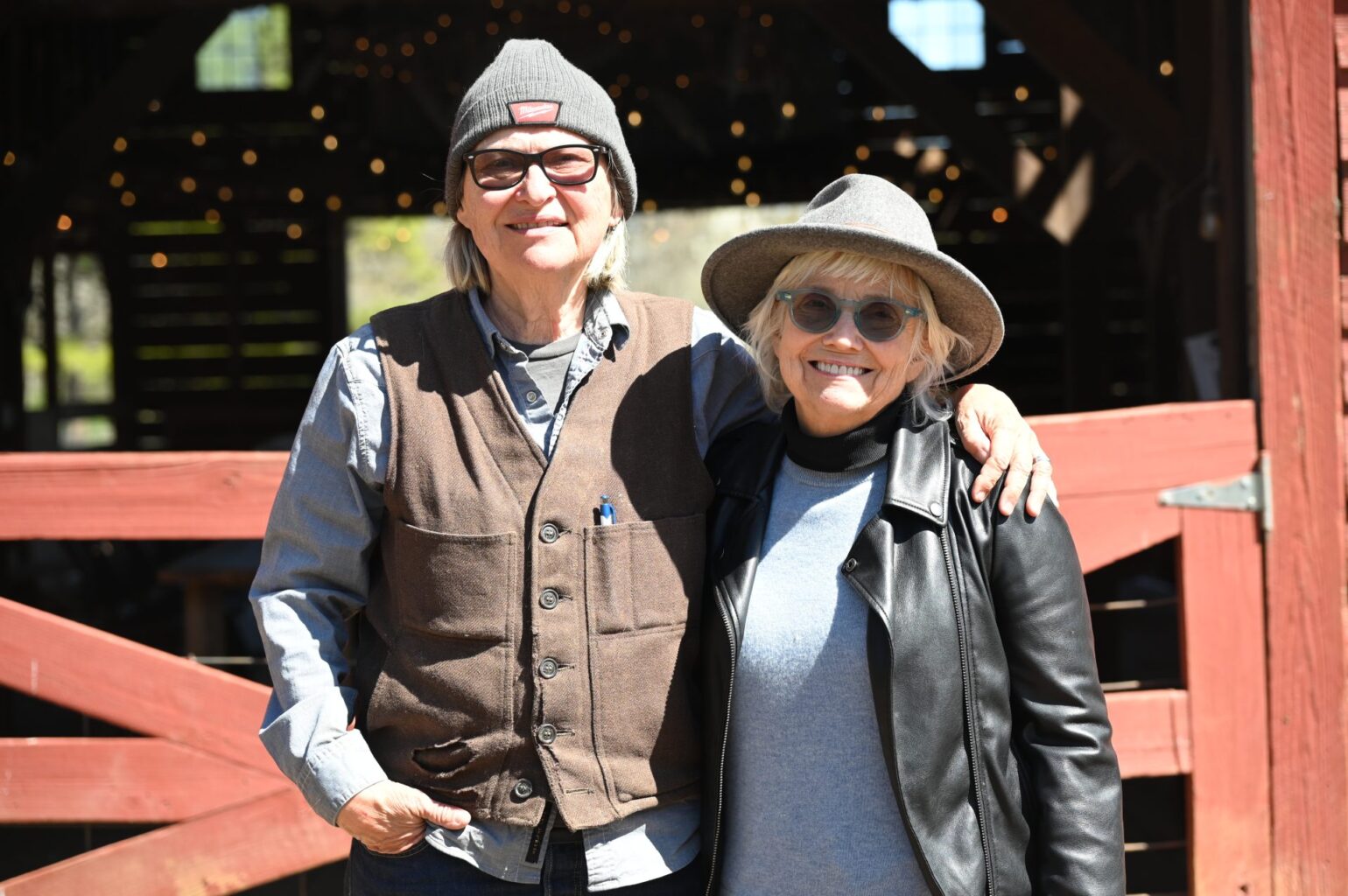
Sweet Olive Farm Animal Rescue CEO Kat Howkins (left) and Co-Chair Susan Pritchett (right) pose at their nonprofit animal rescue farm in Winterville, Ga. on March 13. Sweet Olive Farm was founded in 2010 by Hawkins and Pritchett, and is a 22-acre volunteer-run farm that cares for injured, neglected and re-homed animals. “We didn’t really decide (to start Sweet Olive Farm), it’s like the farm decided us, and the beauty of it is that it happens so organically that we just went with it,” Howkins said. “It was a kind of a big family affair with a very large extended family.” Photo by Maypop Wren
Sweet Olive Farm CEO Kat Howkins and co-chair Susan Pritchett discuss the beginning of their nonprofit animal farm and how it has grown over the years.
Visuals Staffer Maypop Wren: What inspired you to start Sweet Olive Farm Animal Rescue?
Sweet Olive Farm co-chair Susan Pritchett: We were rescuing dogs in Atlanta (in 2005), and our neighbors complained that we had too many dogs, and they called Animal Control on us. We had seven (dogs) at the time, and the eighth one was the straw that broke the camel’s back. When Animal Control came to the door, they were on our side, because they were animal people, and they said, “You could have up to 10 dogs, you just need a kennel license, and you know what would make your neighbors really mad? If you help us out with this pot-belly pig that’s about to be euthanized unless we find a place for it.” And so we said, “Yes.” We’d gotten this place in Athens to bring the dogs on weekends to get out of the neighbor’s hair, so we decided we could bring the potbelly pig here, and then we were on speed dial for every pig, goat and rooster from Fulton County Animal Control.
A gallery of photos at Sweet Olive Farm Animal Rescue on March 13 is shown. Photos by Maypop Wren
MW: What has it been like watching the farm grow over the years?
Sweet Olive Farm CEO Kat Howkins: We’re both very proud. We’re overwhelmed (with) a feeling of being totally blessed because the farm has created so much community, and like-minded people that come and help out, as well as just getting to know all these animals who are just amazing. We’re just thankful.
MW: What are the most common situations that lead to animals coming here?
KH: A lot of them are owner surrenders. A lot of the owner surrenders are pigs that people have gotten because they’re cute, and they have them in their neighborhood, and the neighborhood has a Home Owners Association, and then they say, “You can’t have that pig.” It’s a real bummer because these animals are like pets. It would be like if you had to give your dog away. Another way we get them could be from a hoarding situation. We have gotten goats from Connecticut, cows from Philadelphia, and we work with other animal rescues up and down the East Coast, and that’s one way we get the animals. Another might be an injured animal. We just got an 8-week-old emu, and all of a sudden it can’t use one leg, so it’s a one-legged emu right now.
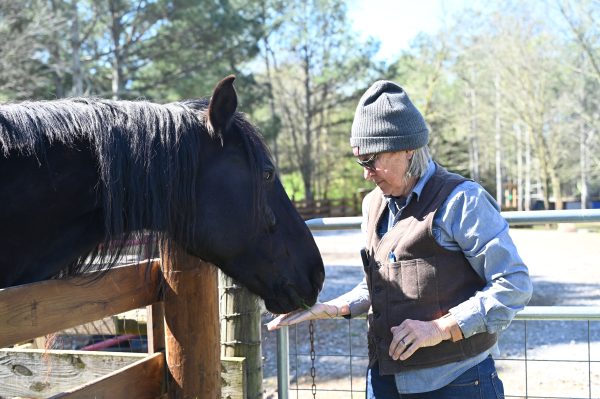
Sweet Olive Farm Animal Rescue CEO Kat Howkins feeds one of the farm’s horses on March 13. Sweet Olive Farm was founded in 2010, and has since grown to house more than 200 rescue animals from all over the United States. “We didn’t really decide (to start the farm), it’s like the farm decided us,” Howkins said, “And it was a kind of a big family affair with a very large extended family.” Photo by Maypop Wren
MW: What does a typical day look like for you guys?
KH: We have volunteers making feed buckets every day. We get bread, fruits and veggies donated from Trader Joe’s and Aldi. Then, we also purchase feed from (Oglethorpe Feed and Hardware Supply). So, we make up quite a lot of feed buckets. And then we come over and feed everybody, make sure everybody has water, just check on everybody’s well-being. We could do anything from repairing the barn (to) cleaning out the barn. I go get hay (and) feed twice a week.
MW: What are some of the biggest challenges caring for animals that are elderly, injured or previously neglected?
KH: You end up spending a lot of time with (injured animals), and you get really close to them, and they’ll get really close to you. When they do pass away, that’s really hard. Vets do recommend euthanasia, (but) we feel like we have a different quality of life here where we just try to let the animals live on their own and live out to their ability, even though they may be handicapped. (In) the abuse case, they’re going to be scared, and they’re going to be probably more aggressive. So, that’s more of a case where we have to socialize those animals.
“There’s a lot of people in this world who might be lonely, nervous or not really want to hang out with people, and so I hope they feel like they’ve come to a safe place where they can be themselves, and where maybe they made a friend. Maybe that friend was an animal.”
— Kat Howkins,
Sweet Olive Farm CEO
MW: What do you hope students and visitors take away from spending time at the farm?
KH: Our main thing with our visitors, volunteers and students is that when we’re doing our volunteer feeding, cleaning up, or building, they’re helping, but they’re also team-building. There’s a lot of people in this world who might be lonely, nervous or not really want to hang out with people, and so I hope they feel like they’ve come to a safe place where they can be themselves, and where maybe they made a friend. Maybe that friend was an animal.