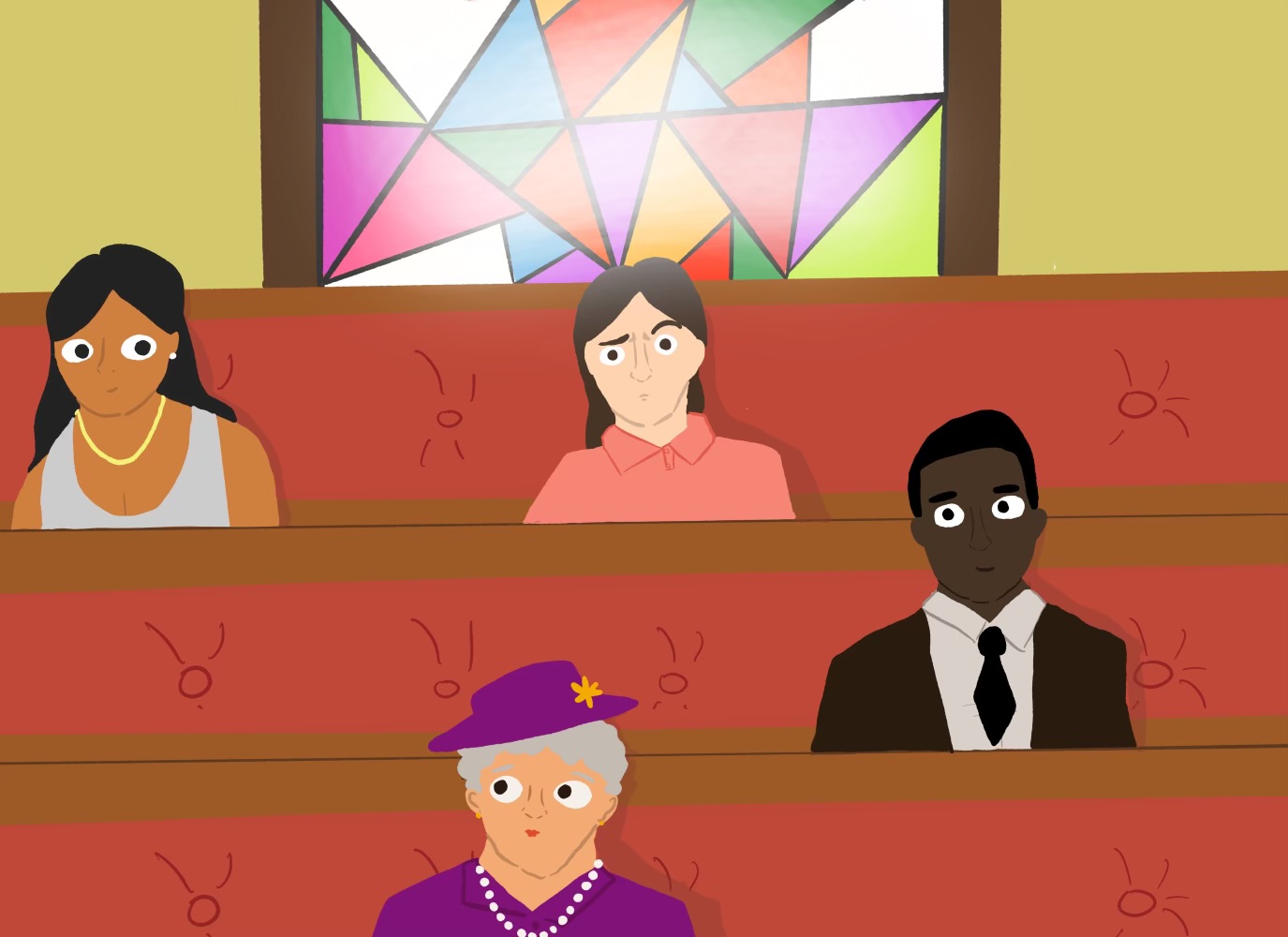
Diversity and Representation Editor Peter Atchley sits in church during a sermon. Atchley spent a long time feeling unstable to question religion and struggled with religious pressure as he grew up. “At 8 years old, I would sit in my car on the way to church thinking to myself, ‘Does God exist? Is he made up?’ I was confused and felt like I couldn’t ask anyone,” Atchley said. “I was surrounded by family members, adults and peers who bought into everything I was questioning.”
Diversity and Representation Editor Peter Atchley talks about how he questioned Christianity from a young age and struggled to build his own relationship with religion.
I received a lot of love from the Oconee Presbyterian Church growing up.
Most people knew my name because of my older siblings and parents. They would greet me, entertain me and once even baked my family a casserole when I was having surgery.
However, even with all of the love from the church, I felt pressured to be silently religious.
For as long as I can remember, it was hard to argue or question why my family was at church; I just knew I had to wear nice clothes on Sunday mornings and again in the evenings for youth groups.
At 8 years old, I would sit in my car on the way to church thinking to myself, ‘Does God exist? Is he made up?’ I was confused and felt like I couldn’t ask anyone. I was surrounded by family members, adults and peers who bought into everything I was questioning.
As I grew up, it was hard to feel like I could be my own person without this Christian weight on my shoulders.
When I was 11, I came out as Queer to my parents and later my family, and while my church had nothing against this, the world seemed to.
Being Christain comes with as many political connotations as being Queer does. As I see it, Christianity is associated with the Republican party and a conservative mindset, while being part of the LBGTQ+ community makes people think you reject Christianity. It’s hard to grow up religious with these conflicting stereotypes in your everyday life, especially as a teenager.
At 14, I was put into a confirmation class at my church, where I began working towards confirming the promises that my parents made for me at my baptism. Confirmation is the means of moving from the children’s congregation to the adults’ via discussions with adults that serve as mentors in the church. While my mentors were great, I still felt unsure. I had a hard time answering their questions, but I put on a holy persona and got through it.
“As I grew up, it was hard to feel like I could be my own person without this Christian weight on my shoulders. ”
— Peter Atchley,
Diversity and Representation
The class culminated with me having to read a written declaration of my faith on a Zoom call with a few church elders several weeks later. It all felt like lying. I thought they would see right through me and reject me, but after they deliberated, I was in.
Even then, it really didn’t feel right. I still had this question if God was even real or not, I couldn’t talk to anyone.
I was baptized because I was a son of a Christian family, but I still have negative feelings toward religion and unanswered questions. What I do know: I refuse to be quiet anymore. I want to build my own relationship with religion and stop feeling like my questions will never be answered.
However, with the expansion of my social circles in seventh and eighth grade, I was able to expose myself to different viewpoints.
Though I may never fully come to terms with my family’s religion, I now have my own relationship with religion that feels right for me,and only me.