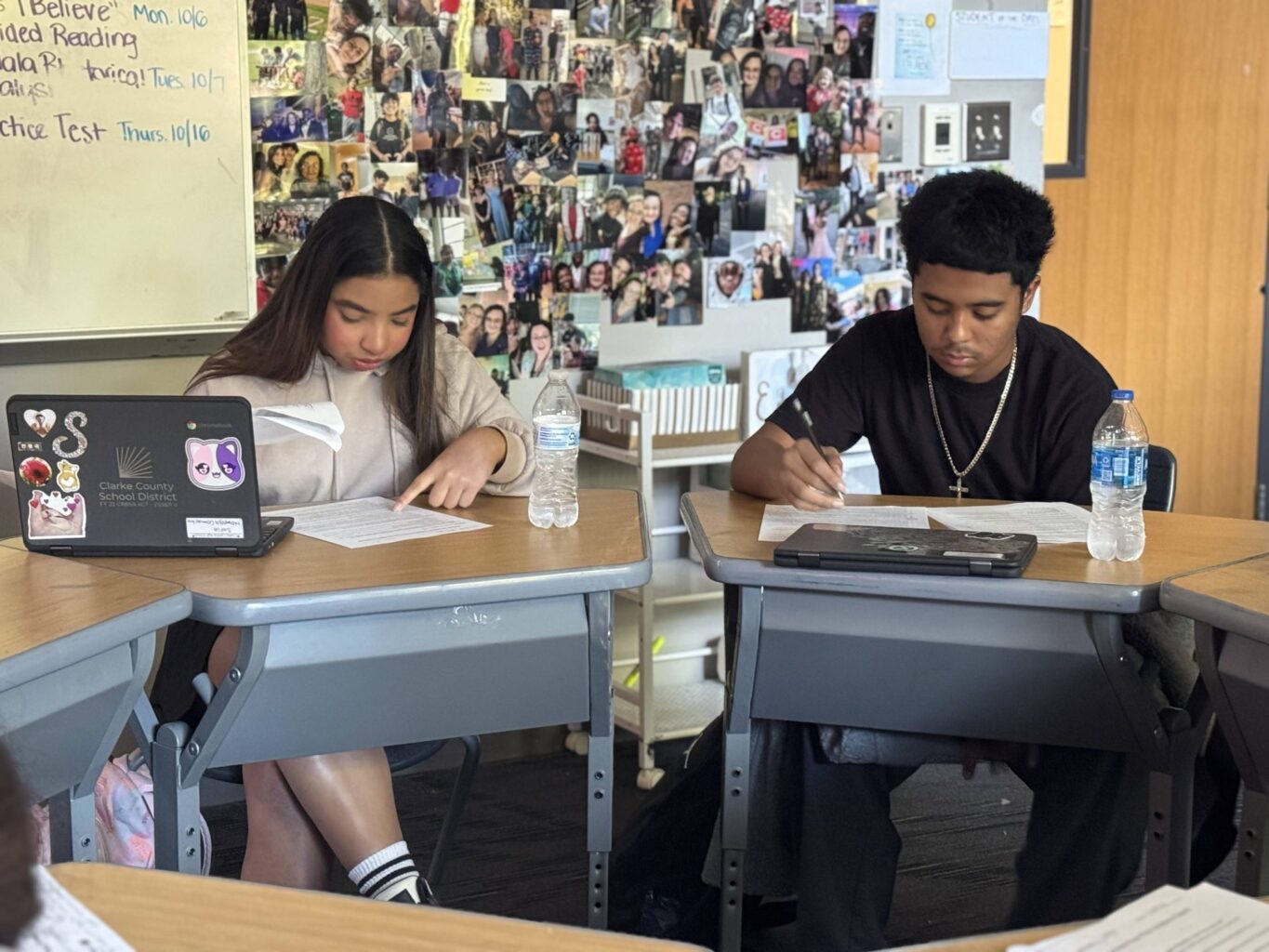
Clarke Central High School Literature and Composition II students take a practice test in Room 224 on Oct. 16. At the start of the 2025-26 school year, the Georgia English departments adopted new standards aimed at reducing illiteracy in students. “English standards changed (and are) moving away from the old way of doing English to embrace literacy,” CCHS Associate Principal Dr. Summer Smith said. “(Literacy) doesn’t just mean reading a book and writing. There’s all kinds of (forms of communication) that (students) interact with in terms of literacy every day, so (we’re) broadening those scopes and sequences for English.” Photo by Sasha Barkan
In response to state-level English standard changes for the 2025-26 school year, CCHS Literature II classes will have an EOC.
After state-level English curriculum changes made by the Georgia Department of Education during the 2025-26 school year, Georgia Literature and Composition II students will take an End-of-Course exam at the end of each semester, the fall one being on Dec. 8 and 9.
In past years, English EOCs were predominantly taken by 11th graders enrolled in Advanced Placement English Language and Composition or Literature III. The new English curriculum that led to the introduction of a Literature II EOC was introduced to improve students’ critical reading and analysis skills, according to Clarke Central High School Associate Principal Dr. Summer Smith.
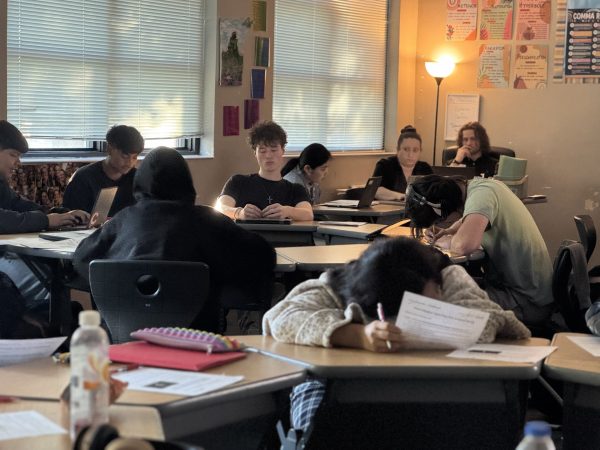
Clarke Central High School Literature and Composition II students take a practice exam for a unit test in Room 224 on Oct. 16. Curriculum changes by the Georgia Department of Education led to the roll out of a Literature II EOC this school year, which CCHS English department teacher and Literature II Team Lead Grace Crumpton has tried to prepare students for through practice exams, something she feels is not her strong suit. “Test prep is not my strong suit,” Crumpton said. “The great news is that a lot of people on my team are really good at it. We have two teachers who came from the middle school where there’s a lot of testing, and our collab teachers are also really familiar with testing. (For the) whole team, (testing is) a strength, and we get support from our instructional coach and our administrator if we need it.” Photo by Sasha Barkan
“Literacy doesn’t just mean reading a book and writing. There’s all kinds of (forms of communication) that you interact with in terms of literacy every day, so (we’re) broadening those scopes and sequences for English,” Smith said.
The new Literature II EOC will be the only Georgia Literature EOC required of sophomores, differing from CCHS junior Mimdabi Bhuiyan’s experience of Literature II, as she participated in Literature II without an EOC. Bhuiyan views testing as an integral motivator for students.
“(Having an EOC) encourages me to learn because if I know I have something I need to pass by the end of the year, I’m gonna take my time and actually learn and study, rather than if there’s no tests at the end of the year (and) I won’t care much about (course material),” Bhuiyan said.
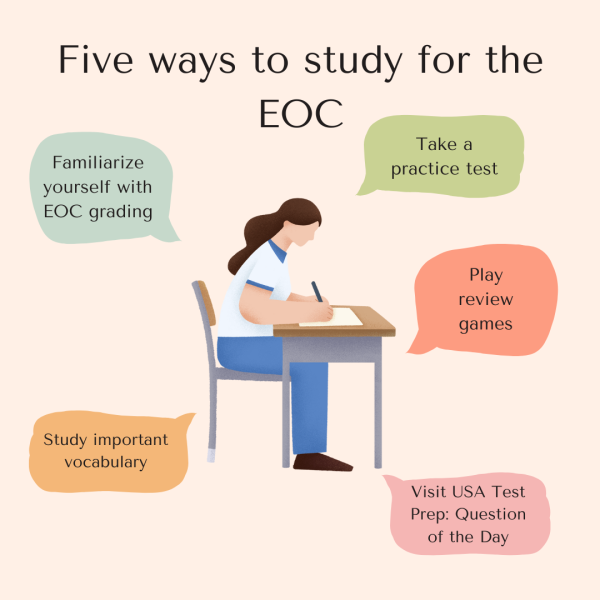
An infographic shows five ways to study for End-of-Course exams, according to Mrs. Buehler’s English Classroom, a website with resources for English students. An End-of-Course exam for Literature II was introduced at the beginning of the 2025-26 school year by the Georgia Department of Education. “We try to build (testing skills) in every unit, through openers or practice with our text (or) throw in three multiple choice questions about (the most recent test) to practice,” Grace Crumpton, Clarke Central High School English department teacher and Literature II Team Lead, said. “We try to do test prep in a way that’s authentic to what we were already teaching.” Graphic by Sasha Barkan
Although CCHS English department teacher and Literature II Team Lead Grace Crumpton feels that the EOC adds pressure for test preparation, the Literature II team continues to prioritize learning.
“Ultimately, (the EOC is) not changing our priorities. We are still going to choose texts that are best for kids. One thing that it has done is help us increase rigor. I feel more of a need to expose kids to difficult texts, knowing that they’re going to have to take an EOC sooner,” Crumpton said. “But, in terms of our priorities, those haven’t changed.”
“(Having an EOC) encourages me to learn because if I know I have something I need to pass by the end of the year, I’m gonna take my time and actually learn and study, rather than if there’s no tests at the end of the year.”
— Mimdabi Bhuiyan,
CCHS junior