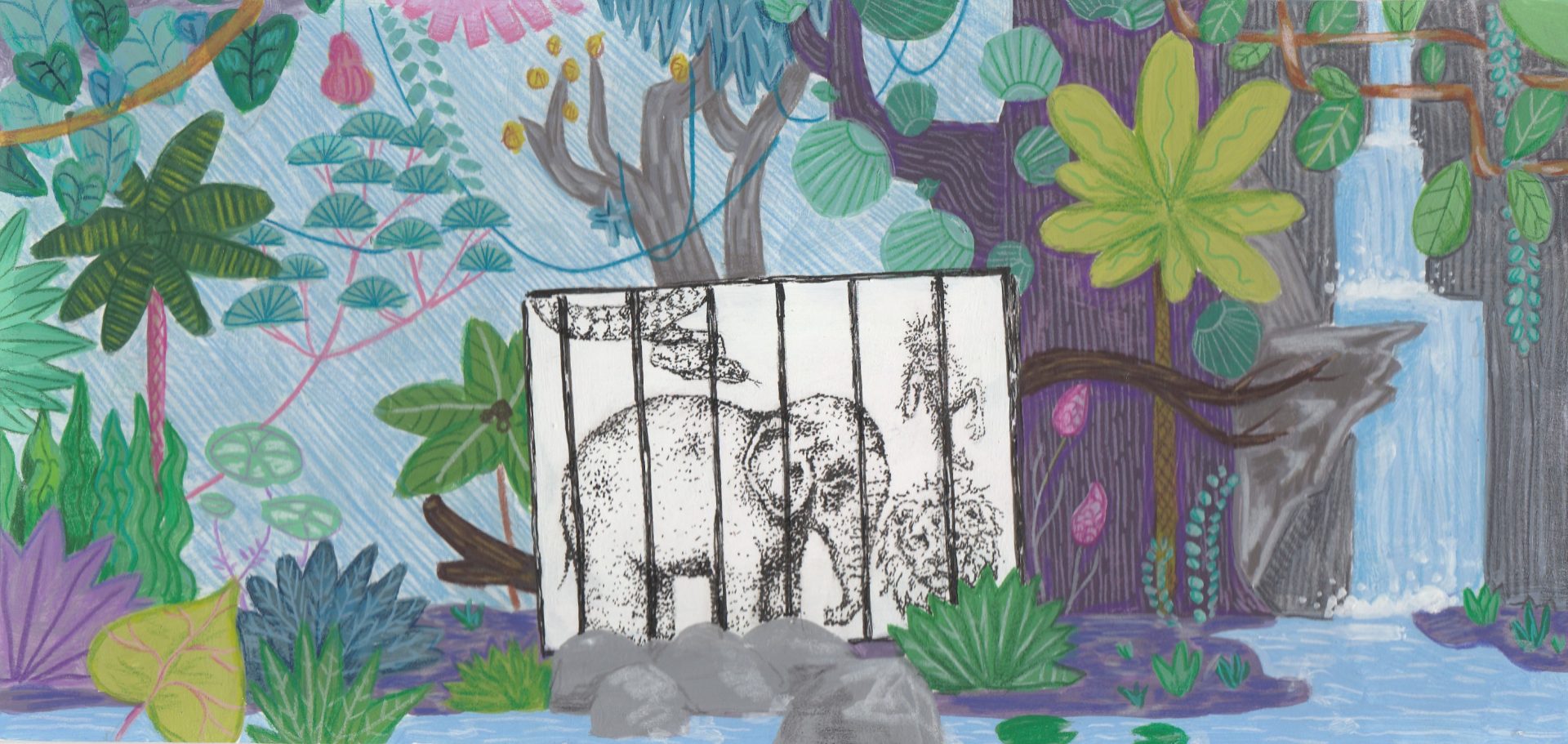
An illustration depicts encaged zoo animals separated from their natural habitats. In order for displays to be accredited as an Association of Zoos and Aquariums institution, they must meet specific ethical guidelines, but in recent practice, zoos have become more corrupt than beneficial. “While in some cases, AZA-accredited zoos can provide necessary conservation efforts for endangered species, it becomes all too easy for welfare to be questioned in those that aren’t,” Viewpoints Editor Isabella Gresham wrote. “Even with AZA guidelines set, captive animals are commonly forced into human interaction, in spite of them regularly showing signs of distress.” Illustration by Tess van Wagtendonk
The welfare of zoo animals should be prioritized over treating them like an exhibit or money-making opportunity, which the public must hold zoos accountable for.
Numerous people tune into their social media platforms to view Punch the Monkey, a baby Japanese macaque living at Ichikawa City Zoo in Japan, cuddling with a stuffed IKEA orangutan for comfort after being abandoned by his mother.
While this situation may be seemingly harmless, after Punch struggled to integrate into the surrounding group of monkeys, widespread calls for better care and safety of animals were all over the media, drawing attention to animal welfare in captivity.
Although zoos have been longstanding institutions and can provide opportunities for education and conservation, the animal cruelty exhibited in past cases proves that holding animals in captivity can rapidly become unethical because of the confined spaces they’re forced into, unnecessary exposure to humans and an inability to engage in natural behaviors.
This was seen at the Cincinnati Zoo on May 28, 2016, when Harambe, a silverback gorilla, was shot and killed rather than tranquilized after dragging a child who fell into his enclosure through water. Earlier, on Feb. 9, 2014, Marius, a giraffe housed in Copenhagen Zoo in Denmark, though healthy, was euthanized because his genes were unsuitable for captive breeding. These are just a few cases in a long pattern of cruelty.
In an attempt to limit cases like these, the Association of Zoos and Aquariums outlines ethical guidelines for exhibits, such as providing natural habitats, behavioral enrichment and high-quality veterinary care for animals. AZA-accredited zoos have to follow these rules, which are enforced by requiring institutions to reapply for accreditation every five years, but the process to do so is expensive, leading to many underfunded displays slipping through the cracks and doing more harm than good.
“Human entertainment should never be prioritized over animal welfare.”
— Isabella Gresham,
Viewpoints Editor
While in some cases, AZA-accredited zoos can provide necessary conservation efforts for endangered species, it becomes all too easy for welfare to be questioned in those that aren’t.
“If (an) animal is being treated within the high standards that (animal caretakers) set ourselves (to), and there’s some research that we’re getting information from that animal, or it’s a part of a conservation effort, I think (captivity is) justified,” University of Georgia Assistant Professor of Wildlife Habitat Management Dr. Marcelo Jorge said. “If the welfare degrades to too far of a point where that individual’s life is no longer better in captivity than in the wild, then that’s when you need to draw (the) line.”
Even with AZA guidelines set, captive animals are commonly forced into human interaction, in spite of them regularly showing signs of distress.
Despite efforts by the animal rights organization People for the Ethical Treatment of Animals, according to its website, at Oswald’s Bear Ranch in Luce County, Michigan, visitors can pay $10 to take a picture with a bear cub, exploiting the animals and forcing them into unnatural interactions. An article by PETA published on Aug. 29, 2018, describes these bear cubs as being severely distressed, pacing and crying after being separated from their mothers for these photos. Nonetheless, the exhibit is still open today.
Instead of using zoos to capitalize on animals’ lives, such attractions should be shut down. Additionally, attention should be brought to enclosures that display poor animal welfare. It is crucial for zoos to follow ethical guidelines, and if the public notices they are not, that should be highlighted.
Human entertainment should never be prioritized over animal welfare. Proper care and welfare should be at the forefront, and it is up to the public to ensure that.