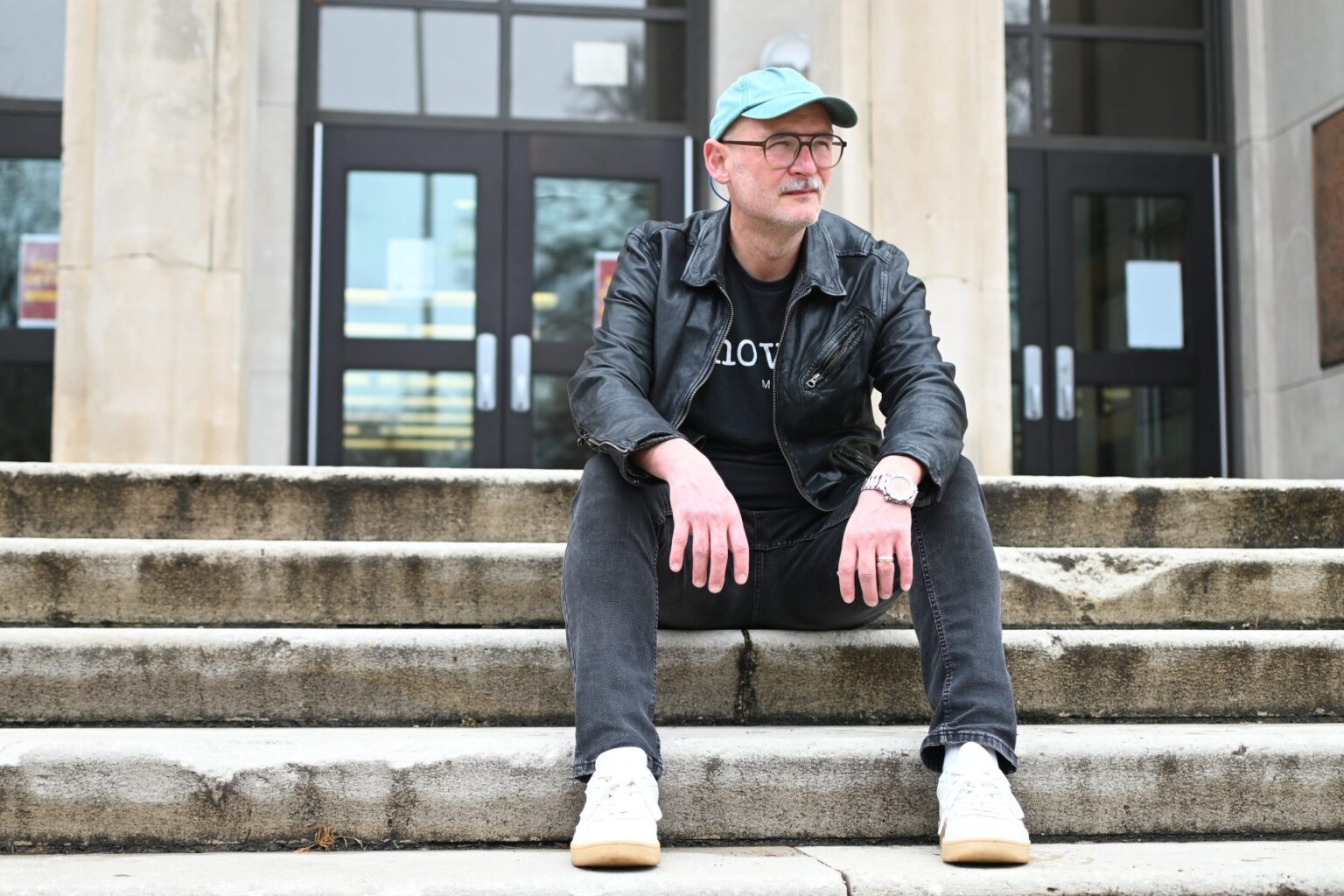
Author Dr. Harrison Scott Key, Savannah College of Art and Design Executive Dean, sits outside the Clarke Central High School Ceremonial Entrance on Feb. 27. Key experienced culture shock when he moved from his birthplace of Memphis, to rural Rankin County, Miss., when he was 9-years-old. “I went from a place where it was cool if you could play Atari and could do tricks on your bike, to a place where most kids had killed something that weighed more than them by the time they were 10 years old,” Key said. Photo by Iliana Tejada
Dr. Harrison Scott Key discusses his experiences as a Southerner and the impact growing up in the South had on his career as a published author.
Senior Copy Editor Cooper Jones: Where did you grow up in Mississippi? What was it like?
Author Dr. Harrison Scott Key: I grew up in Rankin County, which is pretty close to (Jackson, Miss.), but I grew up at the far end, which was very rural, out in the middle of nowhere. It took 20 minutes just to get to the nearest gas station, whereas on the other side of the county, there were movie theaters andshopping malls, and it was a whole other world. I was born in (Memphis, Tenn.), but when I was nine, we moved down to Mississippi. That was such a culture shock for me, and probably was one of the top three or four defining moments of my life. (In Memphis,) I could ride my bike to school, we had a mall and cable TV, and then when we moved to the country, it was just such a shock, because nobody rode bikes. There were no sidewalks. Everybody worked on a farm. It was like going back in time 100 years, and that experience really shaped who I am now.
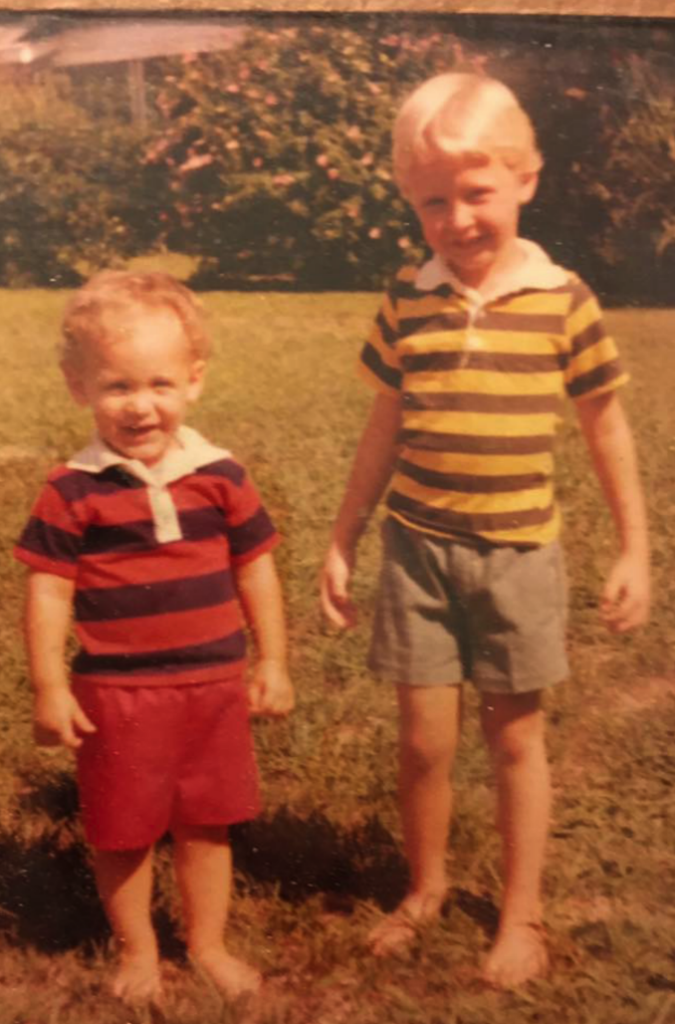
A photo shows author Dr. Harrison Scott Key as a child. Though the South, by definition,is a region, it historically carried more meaning. “It seems to have a stronger identity than any other region of America. So,the question becomes, why?” Key said. “You can’t get away from history when you’re defining it. You have to talk about the history that all of America is living inside, the legacy of enslavement, Civil War, poverty. You can’t not talk about those things (because) that’s why people look down on the South. Because we have this terrible history of voting rights and Civil Rights, it’s hard.” Photo courtesy of Dr. Harrison Scott Key
CJ: How do those experiences shape who you are today?
HSK: I was already a funny kid. I liked to cut up in class and make the girls laugh, so I was always kind of silly and funny and really into reading and things. But, when we moved to Mississippi, I was such a fish out of water. In Memphis, I was one of the cool kids. I wore checkered Vans when I was six, and I had girlfriends and I was talented at all the things little boys were supposed to be good at. When I moved to Mississippi, it was football, hunting, fishing and violence. I went from a place where it was cool if you could play Atari and could do tricks on your bike, to a place where most kids had killed something that weighed more than them by the time they were 10-years-old. So, that fish-out-of-water feeling stayed with me all through my youth and adolescence, and I think that is what helped me become a funny writer.
CJ: How did being a fish out of water grow you as a comedian?
HSK: Comedy is born out of awkward moments and sadness and grief and weirdness and uncomfortability and all those things. I felt really weird when I was a kid. The fact that I liked to read was very strange in rural Mississippi, where guys wouldn’t even admit to having ever read a book. I think that helped me. I relied on my sense of humor to survive in that world. If you could make the girls laugh, they would like you. If you could make the guys laugh, they would think you were cool. I couldn’t make them think I was cool by scoring 1000 touchdowns or by killing 15 wild game a weekend or anything, but I could make them laugh. That really had a lot to do with what I ended up doing with my life. So now, everywhere I go, that’s my natural disposition. To feel like a fish out of water, like I don’t quite fit in.
CJ: What does being Southern mean to you?
HSK: I do think it’s different for every generation. Racism was just a little more obvious and sort of in your face (when I was a child). The idea of being either white or Black was just such a defining category of growing up in the South, and religion is such a big part of Southern life. Even if you don’t go to church, it’s just a part of the whole culture. For me, it was always about race and religion. There was also something about masculinity that was a real part of being in the South, of traditional gender roles. Men play football, and they hunt and they fish and they break things with their hands, and they’re big and tough, and women are all very beautiful and pretty, and they’re amazing cooks, there were so many stereotypes.
Savannah College of Art and Design Executive Dean Dr. Harrison Scott Key poses in various areas of Clarke Central High School on Feb. 27. Photos by Iliana Tejada
CJ: Did your view of the South as being stereotypical ever change?
HSK: I took a Mississippi writers class my senior year (of high school), and that was the first time I really, actually thought about it. We’re reading all these people who were from where I was from, (like) William Faulkner, Eudora Welty, Tennessee Williams. (I was) like, “These are the greatest writers in the history of American literature, and they’re all from where I’m from.” That was cool. I realized everything amazing and everything terrible about America, we perfected in Mississippi: food, music, literature and storytelling, but also racism, misogyny and poverty. hat’s the first time I started thinking about it. (The South) is a weird place.
A Genially shows excerpts from Editor-in-Chief Lea D’Angelo’s reviews of memoirist Dr. Harrison Scott Key’s three books. Graphic by Lea D’Angelo
CJ: When you moved to other regions, what were outsiders’ perceptions of the South like?
HSK: (People would say,) “(Being Southern is) weird. They’re all racist down there.” I found myself sometimes having to defend the South (or) sometimes being like, “It’s actually worse than you think.” I learned in graduate school at Southern Illinois University that) some of the ways that I was raised had not been ideal, at the least. A lot of really progressive classmates would tell me, “Oh, you’re from the South and you’re white and you’re a man and you’re a Christian? You’re really not a good dude.” That made me think about being about the South a lot, as well. My whole career has been unpacking that to some degree, especially my first book “The World’s Largest Man” that really tackles that question, “What does it mean to be yourself? Can you love it and hate it at the same time?” Just because there are some bad things about it, do you have to throw all of it out? I really explore that through my relationship with my dad, because there’s a lot about him that I didn’t love, but I loved him.
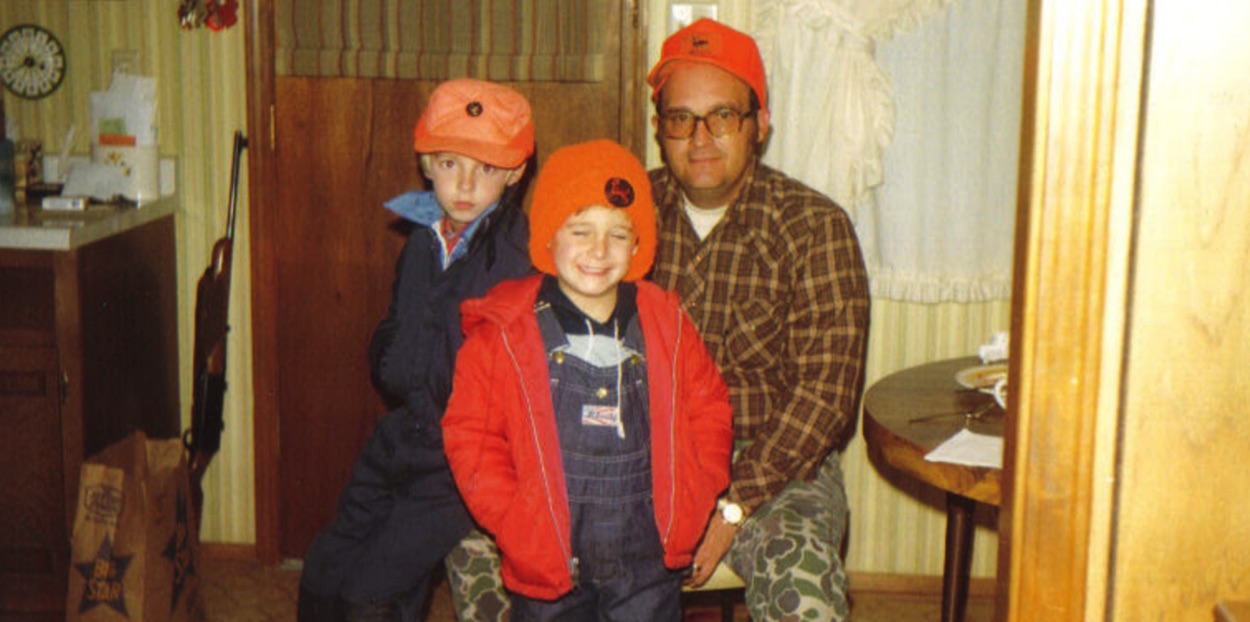
A photo shows Author Dr. Harrison Scott Key as a child with his father and brother. Key spent a majorty of his childhood in rural Mississippi and since leaving has noticed the nuance in the dualities of the South. “It totally is very backwards, but it’s also the most awesome place in the world, so I found myself constantly defending it, but also agreeing with people about how backward it was,” Key said. Photo courtesy of Dr. Harrison Scott Key
CJ: How has the South changed since you were a kid in rural Mississippi?
HSK: (It’s) in some very concrete ways. I grew up an (University of Missippi) fan, and we would always wave the Confederate flag at games. For me, that flag was the Ole Miss flag. The only time I ever saw it was at games. You really didn’t see it on bumper stickers and stuff that you do now. And so, in the ‘90s, the Confederate flag was banned from football games, and the band no longer played “Dixie,” which was the Ole Miss fight song, and they still don’t to this day. There’s very practical things like that. There are things my wife can do that my mom couldn’t do. My mom graduated from college in ‘68. Even back then, really smart women typically only became nurses or teachers. If my mom had come of age now, she’d have the option of law school. Culturally, that was not a thing that was encouraged. It was also similar for guys, too. I found it very weird to be sensitive and creative, and I do love sports, but it wasn’t the end-all be-all of my life. I told my parents that I wanted to become an actor, and then I wanted to become a playwright, (a) very hard conversation. I think that’d be less hard today.
CJ: How do you think people’s perceptions of the South have changed?
HSK: Places outside the South definitely look down on it, and I experienced that when I left the South. If you had a Southern accent, you were obviously dumb. People now realize it’s definitely a weird place, but it doesn’t mean you’re dumb if you’re from there. The population of America is moving South, and the South is cool. College football makes the South cool, and our food makes the South cool, and our culture and the fact that it’s warm all year long. It’s cool to be from here now. I think people realize that so many things that make America so amazing are done in the South, from sports and entertainment to music.