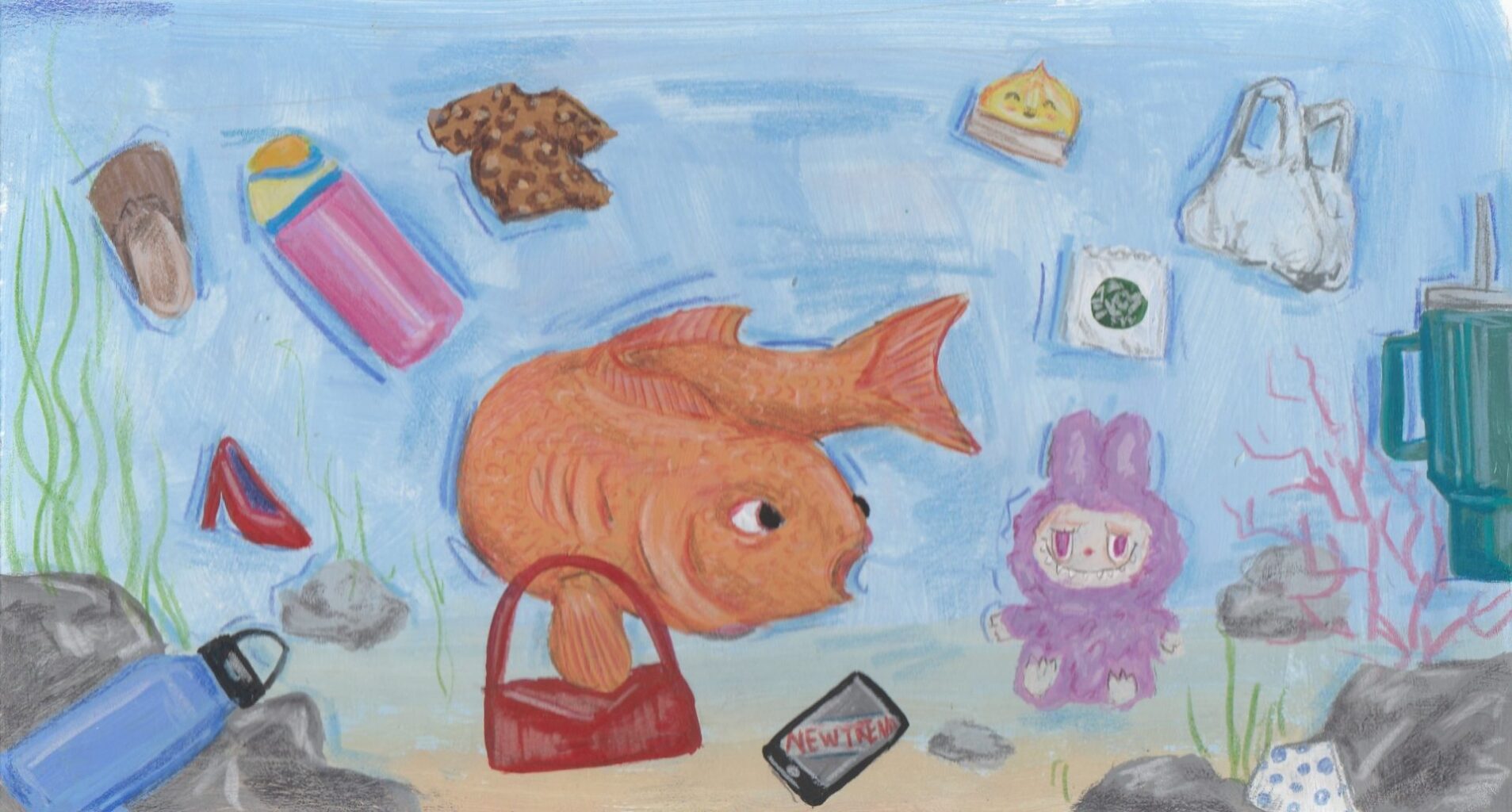
An illustration shows a fish surrounded by “trendy” items and pollution. Overconsumption of items has rapidly increased due to social media, leading to more pollution and the excess burning of fossil fuels. “The rush of wanting a multitude of unnecessary toys has caused factories to make more trending items, like Labubus, to support the amount of demand. While this may be positive for corporations in terms of business success, overproduction causes even more damage by contributing to causing pollution,” Variety Staffer Sara Stuart wrote. Illustration by Tess van Wagtendonk
Due to social media and the desire to fit in, microtrends have become increasingly prevalent, their unsustainability causing irreparable damage to the environment.
Practically every day, there’s a new trend that blows up all over social media.
Consumers will spend hundreds of dollars just to fit into the latest trends and collect each item that corresponds with them, just to throw the goods away in a few months and begin collecting something new. For example, different water bottles have trended over the years, from Hydro Flasks to Stanleys to Owalas, quickly turning into a never- ending cycle of what water bottle is the most “trendy.”
According to the Elton Bryson Stephens Company, which provides research databases, overconsumption is defined as the excessive use of materials to meet supply and demand of a certain trending item. Overconsumption has become more normalized due to social media platforms including Instagram and TikTok.
Social media influences overusage by creating “Fear Of Missing Out” when consumers don’t have the currently trending item. Due to social media’s influence, many stores like CVS and Target have sold out of popular squishy toys called “Nee Dohs.” The overconsumption of various toys makes it nearly impossible for others to get just one while other people get multiple, leading to a higher sense of urgency.
Shortly after a trend goes viral, it dies down. This overconsumption and trendhopping leads to the “trendy” items being thrown away in most cases, which can be extremely detrimental for the environment due to wasting natural resources by burning more than the Earth can produce.
Rapid increase of natural resource usage results in speeding up climate change.>
“Putting aside social responsibility (and) fiscal responsibility, you don’t need another Stanley water bottle if they’re built to last. Why are we getting one for every holiday? It’s contrary to its own marketing,” University of Georgia Associate Professor of Fashion Merchandising Monica Sklar said.
The rush of wanting a multitude of unnecessary toys has caused factories to make more trending items, like Labubus, to support the amount of demand.
While this may be positive for corporations in terms of business success, overproduction causes even more damage by contributing to causing pollution.
According to a 2024 study from the nonprofit United Nations Environmental Program, if action against the rapid increase of overconsumption isn’t taken, natural resource usage could increase by 60% by 2060. This will then cause the Earth to be unable to replenish enough natural resources to catch up to the amount of materials consumed.
This rapid increase of natural resource usage results in speeding up climate change, pollution and long term water and energy loss.
Although overconsumption is something that won’t easily come to an end, more sustainable habits can be picked up. For example, instead of collecting reusable water bottles, consumers should use the same one until it’s no longer usable, and then recycle it. Additionally, instead of buying brand new unnecessary items from companies, second hand or local stores should be supported.
Following unsustainable trends should never become more important than protecting the environment.
