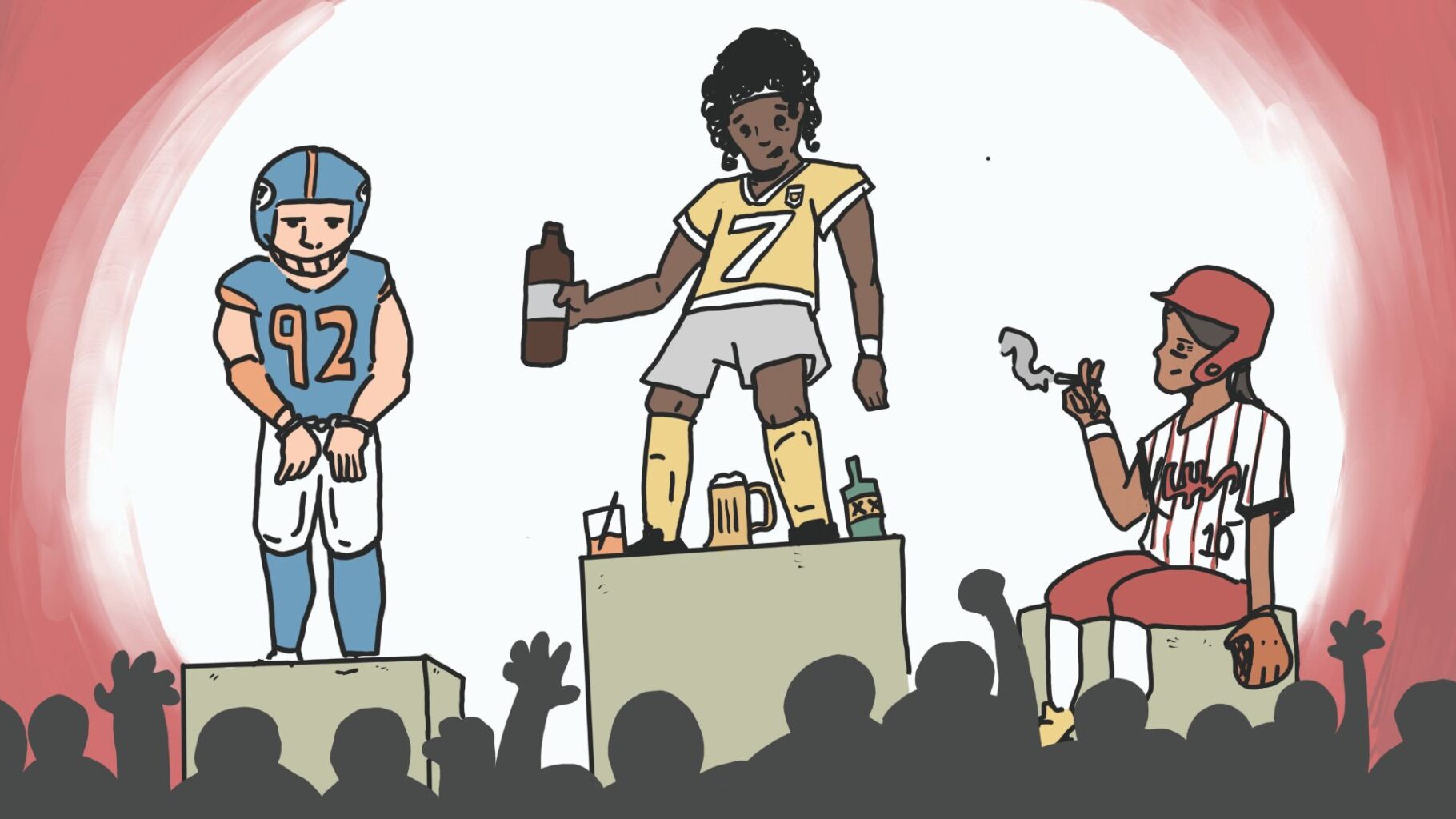
An illustration displays athletes on pedestals partaking in contemptible activities with an audience watching. Sports Editor Liya Taylor discussed how professional and collegiate athletes need to be better role models due to the influence they have on young fans. “Their visibility inherently makes them influential and when adolescents witness their role models engaging in reckless behavior, it can normalize such actions, undermining the values that sports aim to promote,” Taylor wrote. Illustration by Sam Harwell
In the age of social media, professional athletes have immense influence on young fans, making it crucial for them to set better examples.
In 1993, National Basketball Association star Charles Barkley boldly declared in a Nike commercial, “I am not a role model. Just because I dunk a basketball doesn’t mean I should raise your kids.”
The statement ignited widespread debate, but three decades later, one thing has become clear – athletes are role models, and they need to set better examples. CCHS varsity football player and track and field athlete AJ Lonon, a senior, has grown up watching professional and collegiate sports and recognizes the impact athletes can have on their fans.
“A lot of people see athletes and they think, ‘I want to be like him. I got to be flashy, say bad things, buy the chains (and) drive fast,’” Lonon said. “Because you see athletes doing it, you don’t see how that’s not good for you.”
With athletes’ elevated platforms, they need to act more responsibly.
On Oct. 8, 2024, University of Georgia wide receiver Colbie Young was arrested and charged with battery and assault. Similarly, Kansas City Chiefs wide receiver Xavier Worthy was arrested on March 7 for a criminal charge of assault by impeding breathing or circulation. Texas Rangers pitcher Matt Bush was arrested on Oct. 3, 2024 and charged with collision involving injury, evading arrest and driving while intoxicated for at least the third time.
With constant eyes on these athletes, they need to be better role models setting the right example for younger generations.
Their visibility inherently makes them influential and when adolescents witness their role models engaging in reckless behavior, it can normalize such actions, undermining the values that sports aim to promote.
“It’s become a job that you have to be a role model if you’re an athlete because so many people are looking up to you,” CCHS strength and conditioning coordinator Joshua Dawson, a former University of Georgia and Atlanta Falcons outside linebacker, said. “I tell my athletes (that) even in high school you can change your life with a smart decision versus one dumb decision.”
With athletes’ elevated platforms, they must act more responsibly. Embracing this role doesn’t mean leading a perfect life, but rather striving to exemplify positive behavior, acknowledging missteps and using their experiences to educate others.
Barkley’s declaration may have resonated in 1993, but with social media amplifying athletes’ actions today in a way that wasn’t possible then, they no longer have the luxury of opting out of influence. Their words, actions and choices are magnified and shape the values of aspiring athletes.
By acting more responsibly and setting a high standard, professional and collegiate athletes can become more than just competitors – they can be leaders inspiring young fans to chase excellence.