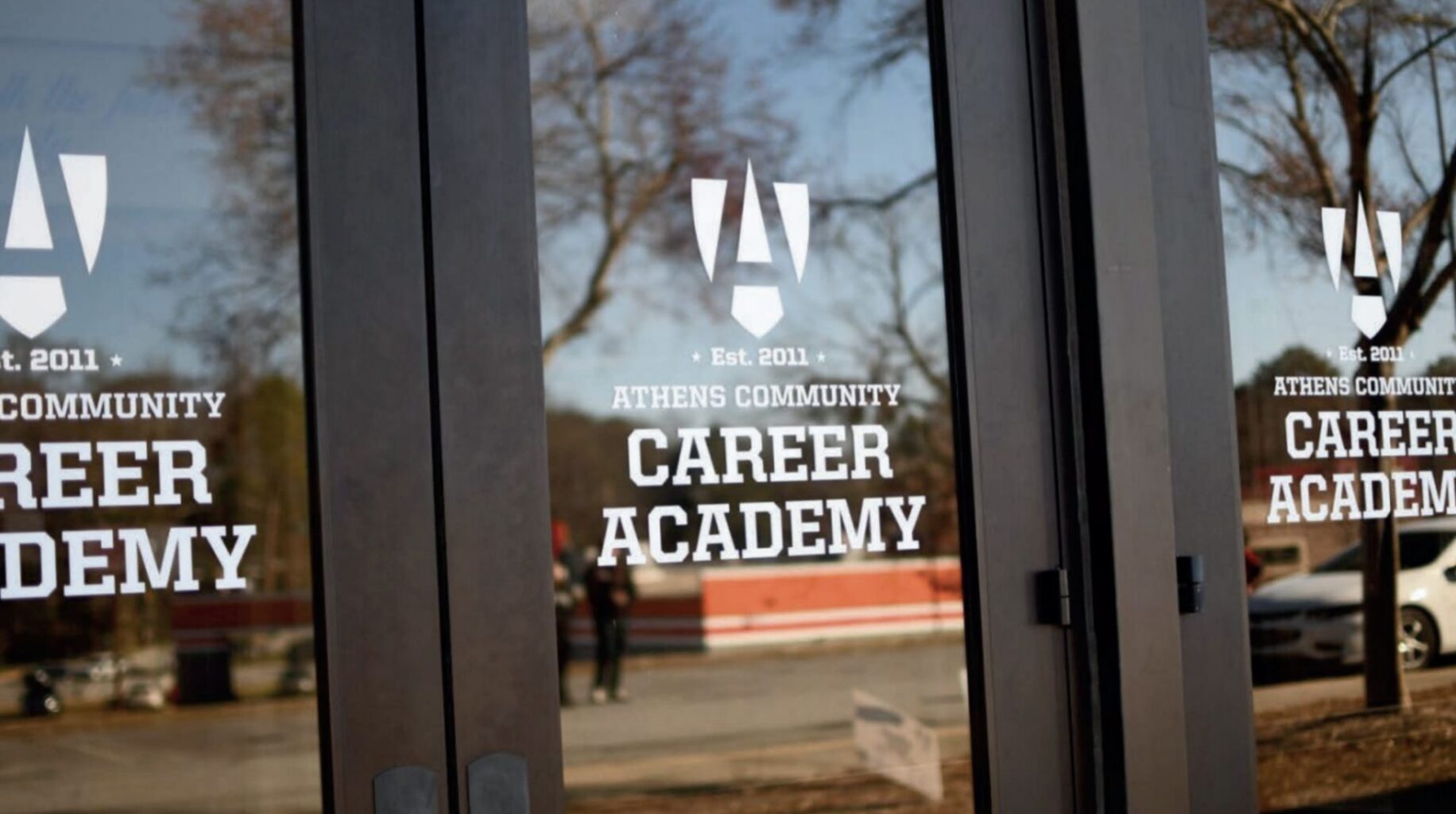
The Clarke County School District Athens Community Career Academy is shown. The program provided students with early exposure to career paths and college-level coursework. “While the ACCA teaches skills students might eventually learn through a trade school or college after high school, getting the experience now, along with the cushion of college credits, will benefit them in the long run.” Photo by Grady Dunston
While CCSD programs such as the Athens Community Career Academy offer opportunities for students to prepare for life after high school, many of them remain overlooked.
A student sits down with their adviser, their graduation checklist looming before them, tick marks next to math, English, social studies and science classes. However, something lies hidden right below the student’s nose: external education opportunities.
All around the Clarke County School District lie options such as dual enrollment, internships, job-based opportunities and even closer to home: the Athens Community Career Academy.
ACCA, one of 55 college and career academies in Georgia, provides opportunities for students to prepare for post-secondary education, build employability skills or pursue a career of their choice, something regular core classes can’t compete with, according to the Georgia Public Policy Foundation as of 2023.
Offering 13 specialized pathways, ranging from Cosmetology and Broadcast Production to Manufacturing and Healthcare, ACCA stands as a great resource for students with a passion.
However, something lies hidden right below the student’s nose: external education opportunities.
“It’s good for students to know that they can get a head start (on a career). If you want to go into culinary one day, why not start now, and (build) your resume?” ACCA Student Ambassador Mariah Carson, a senior, said. “If you want
to build leadership skills, why not go to a place that is dedicated to helping you do that?”
Offering dual enrollment, ACCA students can also earn valuable credit without having to travel to a college campus further away. For the 2020-21 school year, the GPPF reported that 2,475 credits were earned collectively across the school through dual enrollment.
With transportation provided to students traveling from their home high school to the ACCA and back, these credits and technical education are widely available to students, creating very few reasons not to dual enroll or take pathways.
While the ACCA teaches skills students might eventually learn through a trade school or college after high school, getting the experience now, along with the cushion of college credits, will benefit them in the long run.
This was confirmed in a 2024 report by the American Institutes of Research, which found that high school students who participated in Career and Technical Education programs were more likely to be employed post-high school than students who didn’t.
“There are students that graduate from high school that still don’t know how to function outside of school, (so) we want to make sure (that) when they leave (the) Career Academy, they are ahead of the game, whether that’s academic study or going into a job,” ACCA Director Reginald Thomas said.
So, when students sit down to plan their schedule for the next school year, they should look further than that graduation checklist and talk with their advisers about what opportunities would be right for them.