When then-39-year-old Nancy Stangle’s car broke down in the Atlanta suburbs during the spring of 1994, she had no idea that it would drastically alter the course of her life.
Stangle, an Athens-Clarke County resident and aspiring real estate developer, had been on her way to a family friend’s house after spending the day at Zoo Atlanta with her family. Following the incident, however, her plan for a relaxing evening was thrown out the window and her career aspirations realized.
“This woman came out of her house where (the car) broke down, and she offered to let me use her phone to call a tow truck. While we were waiting, she was telling me (about how) she was (recently) able to buy this house in Atlanta, and (that) she was proud of that,” Stangle said. “(I remember) she said, ‘I never would have been able to own a house in Atlanta if it weren’t for (Cabbagetown Revitalization and Future Trust (CRAFT)).
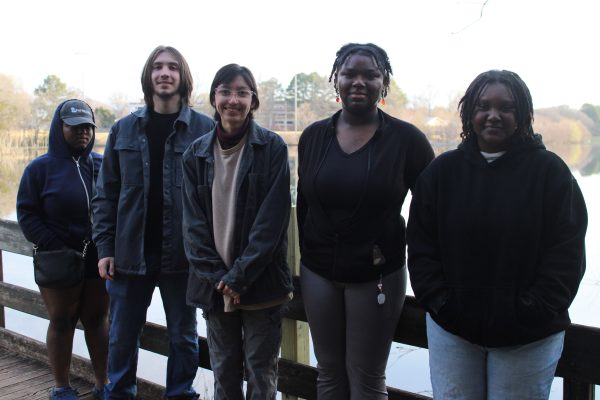
Athens Land Trust Young Conservation Stewards stand the the University of Georgia’s Intramural Fields on March 15. Photo by Wyatt Meyer
This remark stuck out to Stangle, who had been searching for a way to build a community in Athens where members could maintain a sustainable and affordable lifestyle. Just a few months prior, she had helped purchase 132 acres of land on Tallassee Road, hoping to develop it and turn it into residential property. In order to do this, though, she would need an easement, or the right to occupy and use the land, which she had not been able to obtain.
Until she learned about CRAFT.
“We didn’t want to start a nonprofit. We were just trying to do our neighborhood development, but what I realized was that we were looking at a piece of land (and) trying to figure out how to do all these things (when) that’s what happens in a community (land trust),” Stangle said.
So, later that year, Stangle and her colleague Skipper Stipemaas founded the Athens Land Trust (ALT), an organization dedicated to preserving green spaces and providing affordable housing opportunities to impoverished ACC residents.
“We didn’t want to start a nonprofit. We were just trying to do our neighborhood development.”
— Nancy Stangle,
Athens Land Trust Co-founder and Treasurer
Former ALT Executive Director Heather Benham was working at a homeless shelter in the early 2000s when she learned about the nonprofit through her graduate program at the University of Georgia. After serving as an intern for a year, she was hired as the ALT’s first full-time staff member.
“(Families living in the shelter) didn’t have a car, so they depended on the bus. They needed to live somewhere on the bus line, and they couldn’t find a place that was on the bus line to get to their jobs. So, it made me start thinking about housing,” Benham said.
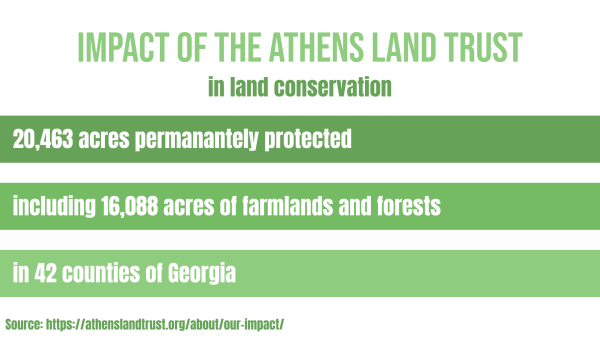
An infographic shows statistics about the impact the Athens Land Trust’s land conservation efforts have had in the Athens area as of 2023. Graphic by Lea D’Angelo
The organization began to propose various initiatives in the first 20 years. For example, in 2013, the group acquired Williams Farm, a five-acre plot of land a mile from Downtown Athens. Additionally, the ALT began several projects along West Broad St., including creating a community garden.
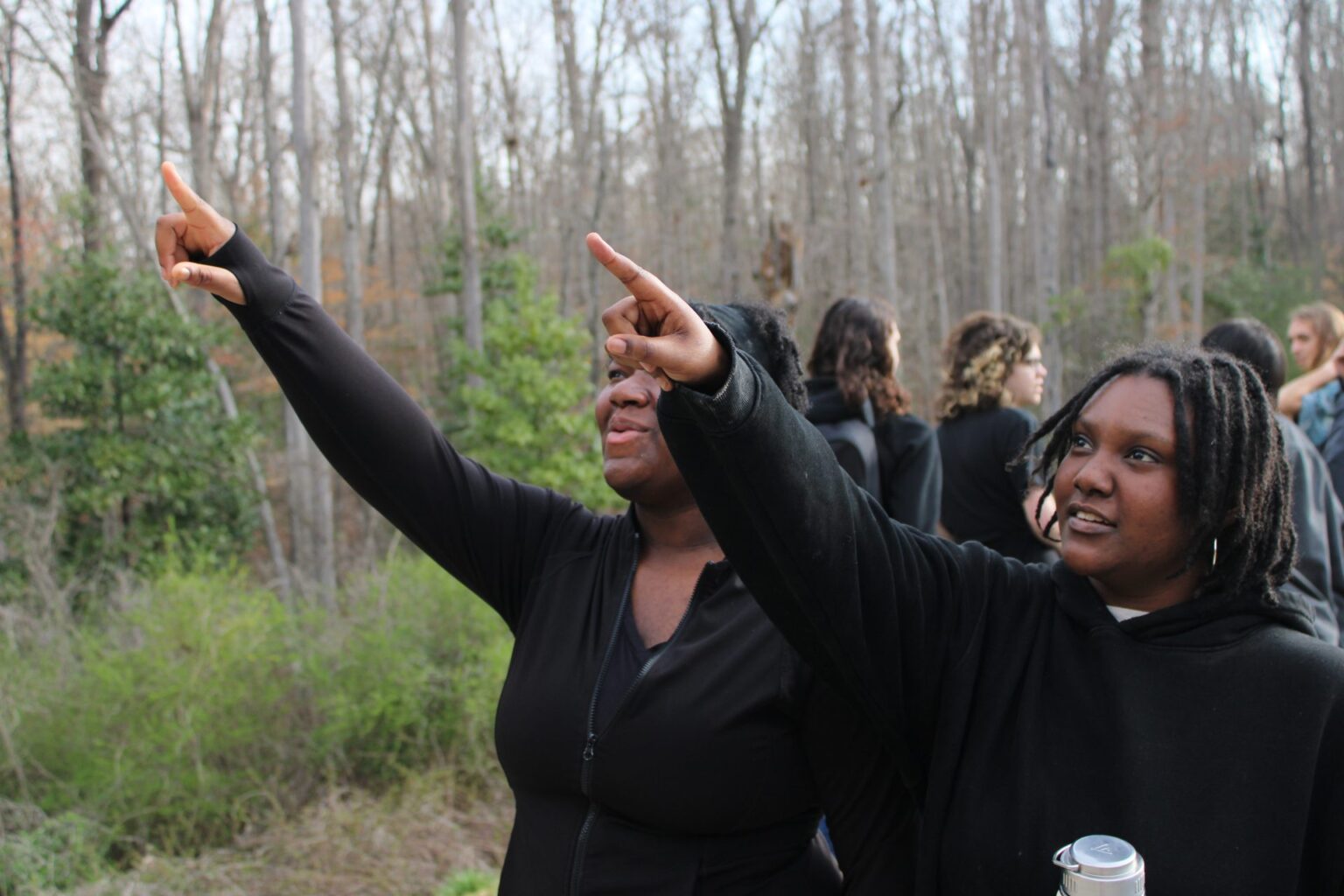
An Athens Land Trust Young Young Conservation Stewards Jayda Nowell, a Cedar Shoals High School sophomore (left), and Kayden Thrasher, a Clarke Central High School senior, point at a bird at the University of Georgia’s Intramural Fields on March 15. Photo by Wyatt Meyer
“In (the West Broad neighborhood), there are (around) 30 single-family homes that we were able to either build or renovate and sell to first-time home buyers,” Benham said. “(There were) another 50 homes there (that) were already owner-occupied (and) we were able to make repairs on (them), so people could stay in their homes.”
The ALT also began to offer Housing and Financial Counseling Services in 2004, which provide ACC residents with financial consultation.
“So many families are just one illness or one car wreck away from being homeless, (or) being in poverty, and so (many) times people that wanted to buy our houses had some credit issues and it takes a while to repair those. We knew that we needed to offer those (counseling) services,” Stangle said.
In 2013, the ALT started its first youth development program, the Young Urban Farmers (YUF), and eventually formed two more. Strategic Partnerships Director Emmanuel Stone has worked with the coordinators of both the YUF and the Young Conservation Stewards (YCS) programs for several years and has seen the impact they have on younger generations.
“Even if (participants) don’t go directly into the field (they’re working in), all of them are taking experiences or things that they learned with them (later) in their life,” Stone said.
A timeline of significant events in the Athens Land Trust’s history is shown. Timeline by Lea D’Angelo

An Athens Land Trust Young Conservation Steward Karl Weinmeister, a Clarke Central High School senior looks through binoculars at the University of Georgia’s Intramural Fields on March 15. Photo by Wyatt Meyer
Today, Stone helps coordinate outreach efforts with the Clarke County School District to encourage students to participate in the ALT’s youth programs. YCS member Karl Weinmeister, a Clarke Central High School senior, joined the program in the summer of 2024 after interacting with the organization’s booth at CCHS’ annual career fair.
“A lot of the time, we focus on removing invasive plants from a public area or trail. We also (go to) volunteer (or) community events that are related to conservation,” Weinmeister said. “I grew up with a forest in my backyard and have always loved nature. Preserving that nature is really close to my heart.”
Stangle, who has seen the organization grow and evolve over the past 20 years, hopes that it will continue to serve people in and around the Athens community.
“(The ALT) has been good for the environment (and) for the Athens community,” Stangle said. “It has slowed down gentrification (and) kept some of the historic homes in the neighborhoods that would (have been destroyed). It’s created generational wealth. (The) construction that we’ve done has brought jobs and money (to) people.”